
The Shift from Star Ratings to Nuanced Dining Queries
For years, restaurant discovery centered on browsing star ratings on Yelp, TripAdvisor, or Google Maps. While these platforms remain active, consumer behavior is shifting toward nuanced conversational requests.
Today's diners submit highly specific, multi-conditional prompts to conversational assistants: 'Find an upscale Italian restaurant in downtown Austin with a quiet patio suitable for a business dinner, offering dedicated gluten-free pasta options, with open reservations this Friday at 7 PM.' In this environment, a generic four-star rating is insufficient. The search engine must parse dietary attributes, ambiance tags, reservation availability, and menu items.
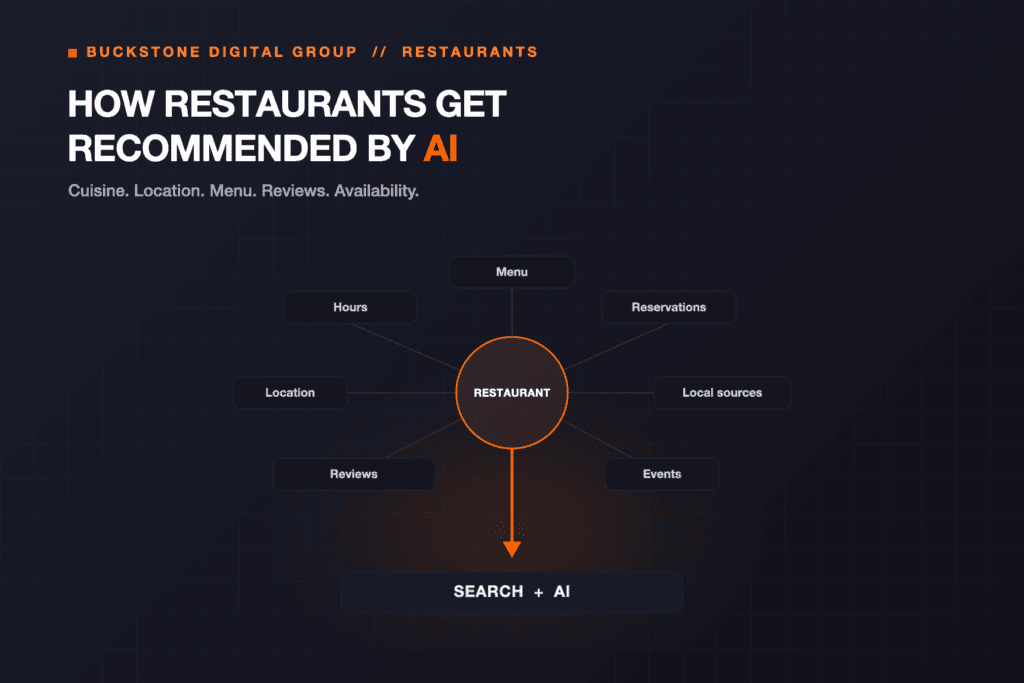
Restaurant local entity graph and menu optimization for AI systems
The Four Pillars of Restaurant AI Discovery
Generative platforms synthesize dining recommendations by consolidating data across four primary digital touchpoints.
| Pillar | Key Attributes Required | Primary Distribution Platforms |
|---|---|---|
| Structured Menu Data | Exact dish names, item descriptions, prices, allergen tags, dietary certifications | HTML menu page, Menu JSON-LD schema, Google Food Ordering |
| Reservation Platform Sync | Real-time table inventory, seating areas (patio, bar, dining room), party size limits | OpenTable, Resy, SevenRooms, Tock, Google Reserve |
| Ambiance & Experience Tags | Noise level, dress code, private dining rooms, parking availability, valet service | Google Business Profile attributes, Yelp ambiance filters, Tripadvisor |
| Corroborative Press & Critics | Local newspaper dining reviews, Eater 38 inclusions, James Beard nominations | Eater, Infatuation, Michelin Guide, local city magazines |
Transforming Menus into Structured Schema
The most critical operational upgrade for any hospitality business is migrating from static PDF or JPEG menu images to live, semantic HTML supported by Schema.org Restaurant and Menu markup.
By defining every appetizer, entree, and beverage as a MenuItem object with explicit offers, price, and suitableForDiet properties (e.g., GlutenFreeDiet, VeganDiet), you ensure retrieval bots can immediately parse and verify dish options when responding to complex dining prompts.
- Menus hosted as multi-megabyte PDF downloads or photo gallery images
- Google Business Profile lacking specific ambiance and dietary attribute tags
- Disjointed reservation links that force diners to search third-party portals
- Zero structured schema markup beyond basic WordPress site defaults
- Live server-rendered HTML menu with individual prices and ingredient descriptions
- Full Schema.org Menu and MenuItem markup with explicit dietary classifications
- Direct integration with OpenTable or Resy via Google Reserve API buttons
- Synchronized operating hours, holiday schedules, and parking specifications
Four-Step Hospital Discovery Optimization Plan
Restaurant managers and hospitality marketing teams can implement this program to drive immediate table bookings.
Publish Live HTML Menus with Schema
Replace PDF menu links with fully responsive HTML pages marked up with Schema.org Menu, MenuItem, and price properties.
Optimize Google Business Profile Attributes
Fill out every available category attribute: outdoor seating, dog-friendly, live music, wheelchair accessibility, and certified dietary accommodations.
Enable Direct Google Reserve Integration
Connect your reservation software (OpenTable, Resy, SevenRooms) directly to Google Reserve so users can book tables without leaving search interfaces.
Cultivate Review Sentiment Around Specific Dishes
Encourage diners to mention favorite menu items, specific cocktails, and service experiences in their Google and Yelp reviews.
Frequently Asked Questions About Restaurant AI Visibility
Key considerations for restaurateurs and hospitality marketing managers.
Key Questions & Insights
Language models pull operating hours from inconsistent web sources. If your website, Google Business Profile, Apple Maps, and Yelp show conflicting hours, the model defaults to conservative warnings or incorrectly flags the venue as closed. Maintain unanimous hours across all directories.
Shen Li
AuthorSenior Search & AI Visibility Strategist at GetRanked. Specializing in technical SEO, Answer Engine Optimization (AEO), entity architecture, and search performance.
Explore GetRanked Services
Turn what you just read into compounding organic visibility, qualified buyer traffic, and revenue growth.
SEO Services
Full-funnel technical SEO, structured content architecture, and authority building designed to capture non-branded search demand.
Local SEO
Google Business Profile optimization, localized entity clarity, and geo-targeted authority to dominate high-intent local queries.
AEO & AI Search Visibility
Structured entity optimization, authoritative citations, and prompt engineering so your brand is recommended by ChatGPT and Google AI Overviews.
Web Design & Development
High-speed, conversion-focused Next.js websites engineered for Core Web Vitals, semantic schema, and seamless buyer experiences.