
The Death of the Gated SaaS Buying Journey
For a decade, B2B SaaS marketing relied on a standard formula: write a top-of-funnel ebook, gate it behind an email capture form, enroll the prospect in a 7-touch marketing automation cadence, and demand a discovery call with a Business Development Representative before revealing product pricing or technical documentation.
Modern software buyers reject this friction. Today, software architects, engineering leads, and VP-level buyers use conversational AI to evaluate software options: 'Compare Snowflake, BigQuery, and Databricks for multi-tenant SaaS analytics, analyzing query concurrency limits, SOC 2 Type II compliance, pricing models, and native Python SDK support.' If your software's capabilities are locked behind gated demo forms or buried in marketing platitudes, AI evaluation engines will recommend your competitors.
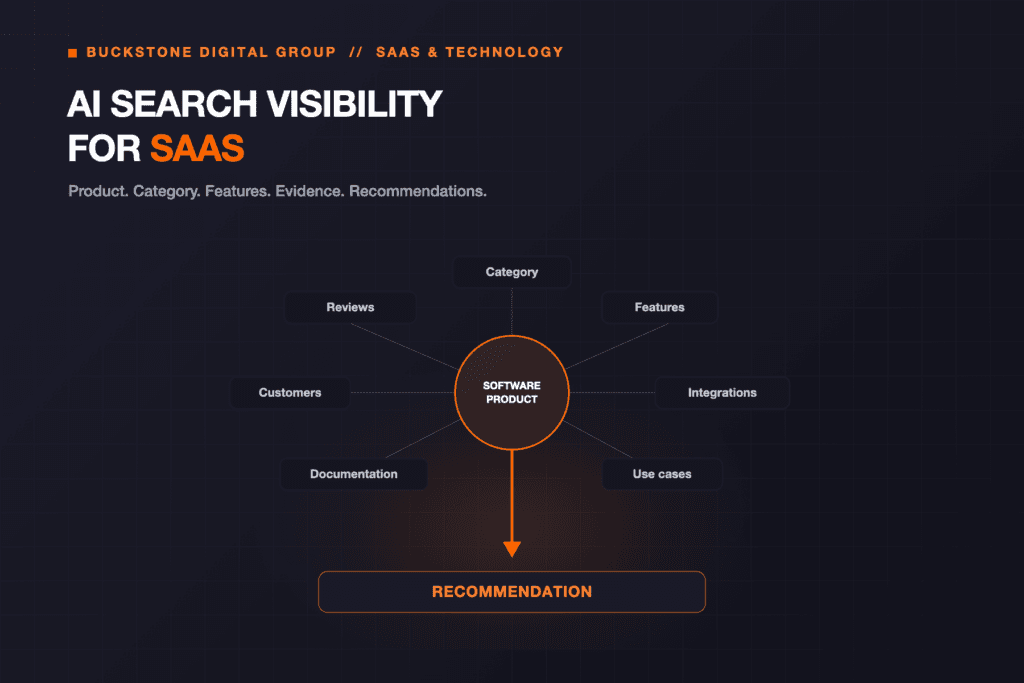
B2B SaaS entity architecture and technical documentation indexing for AI engines
The Four Architectural Dimensions Evaluated by AI
When generative models evaluate software solutions for enterprise procurement prompts, they extract four primary technical categories.
| Category | What AI Looks For | How to Optimize |
|---|---|---|
| Integration Ecosystem | Native bi-directional connectors (e.g., Salesforce, Slack, Hubspot, Snowflake) | Build dedicated public integration directory pages with explicit API specs. |
| Security & Compliance | SOC 2 Type II, ISO 27001, HIPAA, GDPR, FedRAMP authorization, SSO / SAML support | Publish a dedicated Trust Center detailing compliance frameworks and audit dates. |
| Commercial Pricing Model | Per-seat, usage-based, consumption metrics, free trial terms, enterprise tiers | Maintain a public pricing page with clear feature comparison tables. |
| Technical API Specs | REST, GraphQL, webhook event payloads, rate limits, SDK language availability | Ensure developer documentation is server-rendered and indexed in robots.txt. |
Engineering Integration and Product Comparison Hubs
Software comparison queries ('Competitor A vs Competitor B') represent the highest-intent organic traffic in the SaaS industry. Historically, SaaS companies created biased comparison tables where their own product had green checkmarks across every row while competitors were depicted as deficient.
Modern answer engines cross-reference multiple web sources and easily detect blatant vendor bias. To win citations on comparison prompts, SaaS companies must publish fair, technically nuanced comparison teardowns that objectively acknowledge competitor strengths while articulating the precise architectural scenarios where their own solution excels.
- Simplistic comparison tables giving competitor red X marks on basic features
- Vague marketing slogans: 'The modern alternative to legacy software'
- Developer documentation hidden behind login credentials or heavy client-side SPAs
- Pricing hidden behind 'Contact Sales for Custom Enterprise Quote' buttons
- In-depth architectural teardowns explaining tradeoffs, throughput, and latencies
- Transparent pricing tiers with specific usage limits and feature inclusions
- Publicly indexed developer docs with complete OpenAPI / Swagger specifications
- SoftwareApplication and FAQPage schemas with verified G2 and Capterra links
Four Steps to Build SaaS Generative Visibility
SaaS marketing and growth teams should execute this technical visibility roadmap.
Unblock Developer and API Documentation
Ensure your developer documentation is rendered server-side and fully accessible to OAI-SearchBot and PerplexityBot without authentication gates.
Deploy SoftwareApplication Schema
Implement comprehensive Schema.org SoftwareApplication markup declaring operating systems, application categories, and verified software ratings.
Publish Comprehensive Integration Pages
Create individual indexable landing pages for every third-party software integration, detailing authentication methods and supported sync triggers.
Cultivate Verified Peer Reviews on G2 and TrustRadius
Maintain active review acquisition campaigns targeting verified technical users to build consistent category authority in third-party software grids.
Frequently Asked Questions About AI Search for SaaS
Key considerations for SaaS founders, product marketing leaders, and growth executives.
Key Questions & Insights
While G2 Grid placement is a strong entity signal that language models reference when assessing market consensus, it must be supported by accessible on-site technical documentation, clear integration guides, and transparent pricing.
Shen Li
AuthorSenior Search & AI Visibility Strategist at GetRanked. Specializing in technical SEO, Answer Engine Optimization (AEO), entity architecture, and search performance.
Explore GetRanked Services
Turn what you just read into compounding organic visibility, qualified buyer traffic, and revenue growth.
SEO Services
Full-funnel technical SEO, structured content architecture, and authority building designed to capture non-branded search demand.
Local SEO
Google Business Profile optimization, localized entity clarity, and geo-targeted authority to dominate high-intent local queries.
AEO & AI Search Visibility
Structured entity optimization, authoritative citations, and prompt engineering so your brand is recommended by ChatGPT and Google AI Overviews.
Web Design & Development
High-speed, conversion-focused Next.js websites engineered for Core Web Vitals, semantic schema, and seamless buyer experiences.